
Concrete Fence vs Wood Fence: Cost Comparison & Long-Term Value in South Florida
Comparing concrete and wood fencing isn’t just about looks—it’s really about upfront cost, lifetime cost, climate durability, and maintenance needs. In places like Boca Raton, where salt, humidity, and pests are part of everyday life, these differences become even more noticeable.
How Concrete and Wood Fences Compare?
When I compared both options at home, the price gap was clear right away, but the long-term math told a different story.
Wood fencing wins in short-term affordability, while concrete fencing dominates in longevity, stability, and minimal upkeep. Below, I break down the real numbers, real maintenance requirements, and the long-term financial impact of both.
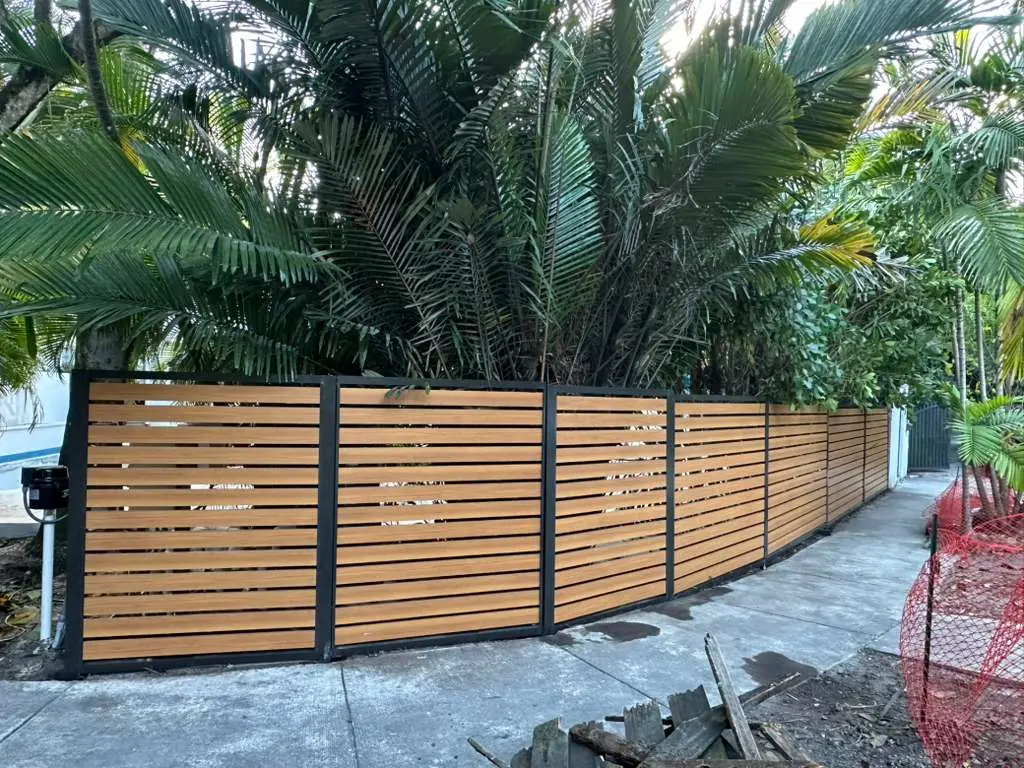
Upfront Costs: Price per Foot
When I was getting quotes in Boca Raton, I consistently saw:
Wood fence: $15–$50 per linear foot
(Varies by wood type, style, height, and labor.)Concrete fence: Higher initial investment, often several times the cost of wood
(And concrete delivery can add even more due to weight.)
Wood clearly wins in upfront affordability. You’ll pay more—sometimes much more—for concrete, but it’s not the whole story.
Long-Term Costs: Maintenance, Repairs & Replacement
Here’s where wood fencing gets expensive over time. From my own experience, a wood fence in South Florida needs regular staining or sealing, plus periodic repairs to deal with rot, moisture damage, and pests. That adds up quickly.
Concrete fencing, on the other hand, has near-zero maintenance. I learned that once the installation is done, you’re basically finished—no staining, no rot, no warping, no insect treatment.
Average long-term cost behavior:
| Item | Wood Fence | Concrete Fence |
|---|---|---|
| Maintenance | High (annual or bi-annual) | Very low |
| Pest vulnerability | High | None |
| Replacement cycle | 10–15 years | 30–50+ years |
| Total cost over lifespan | Often higher | Usually lower |
Durability in Humid and Coastal Environments (Boca Raton Case)
Florida weather is harsh on wood. Between humidity, salt air, hurricanes, and termites, a wood fence has a lot working against it.
In my area near Boca Raton, I saw firsthand how wood fencing can degrade fast unless you stay on top of sealing and repairs. Concrete, though, doesn’t care about moisture or pests—and it even provides sound buffering, something I appreciated more than I expected.
Key climate takeaways
Wood = rot, swelling, fading, pest exposure.
Concrete = stable, weather-resistant, excellent for coastal zones.
Installation Factors That Affect Total Price
Wood fence installation tends to be simpler, faster, and cheaper.
Concrete fence installation, however, requires heavy equipment, skilled labor, and sometimes extra delivery fees. The panels are heavy, so access to your property can influence the quote.
Factors affecting both materials
Height and style
Linear footage
Terrain / grading
Gate hardware
Custom finishes
Because concrete installation is more complex, it’s a bigger upfront investment—but again, it’s typically a one-time cost.
Privacy, Noise Reduction & Aesthetic Considerations
- Wood gives a classic look and can be painted or stained in many finishes. It’s flexible in style but not always consistent in longevity.
- Concrete brings a more premium, solid, and modern aesthetic. Many homeowners choose it for the noise reduction—something I noticed right away once mine was in place.
Both types of fences provide complete privacy, but concrete fences offer better noise control and wooden fences offer greater flexibility in terms of style.
Which Fence Is Cheaper Over Time?
When I ran the numbers for my own property, the conclusion was quite clear:
Wood was cheaper at the beginning but more expensive every year because of sealing and repairs.
Concrete cost more upfront, but after that, my expenses were basically zero.
In coastal Florida, where moisture and salt eat away at wood, concrete became the clear long-term winner for me. If you want a lower initial cost, choose wooden fences, but if you want something more durable, choose concrete fences.
When to Choose Concrete vs Wood?
Choose wood if:
You need the lowest upfront price.
You prefer a natural look.
You don’t mind regular maintenance.
Choose concrete if:
You want long-term savings.
You live in a humid or coastal climate.
You value durability, stability, and noise reduction.
You want minimal maintenance for decades.
Frequently asked questions
Is a concrete fence worth the high upfront cost?
In South Florida, yes, because you save money long term on maintenance, repairs, and replacements.
How often does a wood fence need sealing in Florida?
Typically every 1–2 years, especially in humid, coastal areas like Boca Raton.
How long does a wood fence last in Palm Beach?
Usually 10–15 years, depending on maintenance.
How long does a concrete fence last?
Concrete fences often last 30–50+ years with minimal upkeep.
Does concrete fencing help with noise?
Yes, concrete provides noticeable sound buffering, especially against street noise.
Does concrete add more property value than wood?
Often yes, because it’s seen as a premium, durable upgrade.
Is concrete fencing hurricane-resistant?
Concrete performs significantly better than wood in high-wind environments.
Can wood still be a good choice in Florida?
Absolutely, if budget is limited upfront or you prefer the traditional look.
What affects the cost of concrete fence installation the most?
Weight, delivery, labor, access to the yard, and custom finishes.
Which is easier to repair, wood or concrete?
Wood is easier (and cheaper) to repair, but repairs are far more frequent.