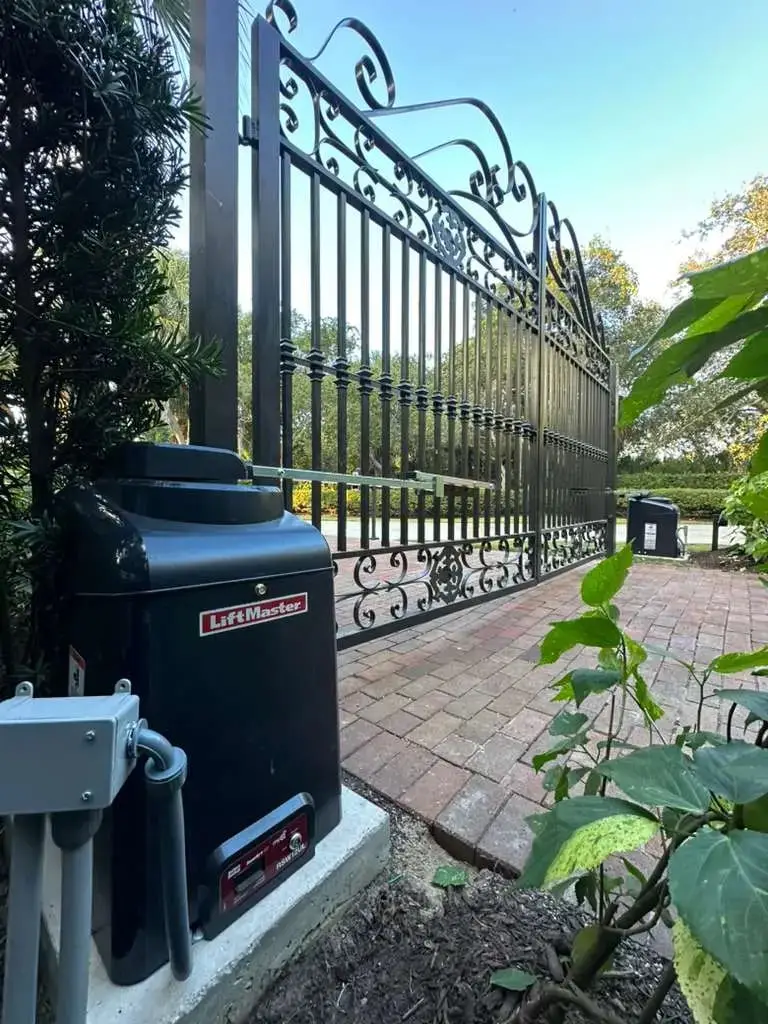
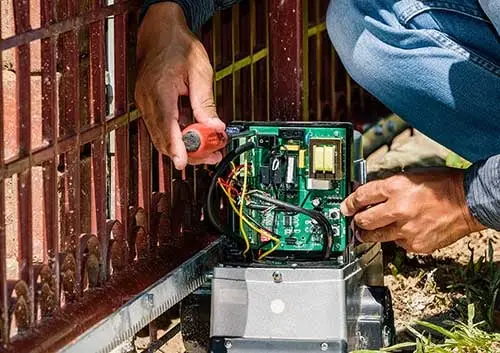
A gate that won’t open is more than an inconvenience — it can trap your car inside or leave your property exposed. Before forcing anything, work through these steps in order. Most of the time the cause is simple, and checking it safely can save you a service call.
Safety first
- Never push or pull a gate that’s connected to a working operator. You can strip gears, bend the arm or break the chain.
- Turn off power to the operator before touching moving parts.
- Keep children and pets away from the gate while you troubleshoot.
Step 1: Check the remote, keypad and power
- Remote battery. Try a second remote or the keypad. If the other device works, replace the battery in the first remote.
- Power to the operator. Check the breaker in your electrical panel and the outlet or disconnect next to the gate. After a storm, a tripped breaker is one of the most common causes.
- Operator lights. Most control boards have indicator lights. No lights at all usually points to a power problem, a blown fuse or a failed transformer.
Step 2: Check the safety photo-eyes
Photo-eyes on each side of the gate send an invisible beam. If something blocks it — or if the sensors are dirty or misaligned — the gate won’t move or will reverse.
- Wipe both lenses with a soft cloth.
- Make sure nothing (plants, trash cans, vehicles) is in the beam.
- Check that the indicator lights on both sensors are solid. A flashing light usually means they’re out of alignment.
Step 3: Look at the gate itself
- Slide gates: clear rocks, leaves and debris from the track and check that the wheels are on the track and turning freely.
- Swing gates: look for sagging hinges, a gate dragging on the ground or a bent operator arm.
- Welds and brackets: cracked welds or loose brackets can make the gate bind so the motor can’t move it.
Step 4: Use the manual release
Every gate operator has a manual release — usually a key lock or lever on the operator housing. Releasing it disconnects the motor so you can open the gate by hand. Check your operator’s manual (LiftMaster, Viking, Eagle and others place it differently), and remember to re-engage it and secure the gate afterward.
When to call a professional
Call a technician right away if:
- The motor hums but the gate doesn’t move (often a failed capacitor or stripped gear)
- You hear grinding, clicking or squealing from the operator
- You notice a burning smell or see scorch marks on the control board
- The gate moves erratically, stops halfway or reverses for no reason
- The problem started after a storm or power surge
Our technicians repair every major operator brand and carry the most common parts on the truck, so most repairs are finished on the first visit. If your gate is stuck open or closed, our 24/7 emergency gate repair team can usually be there in 60–90 minutes — and you can learn more about our gate motor and opener repair service.